
Types of Wood
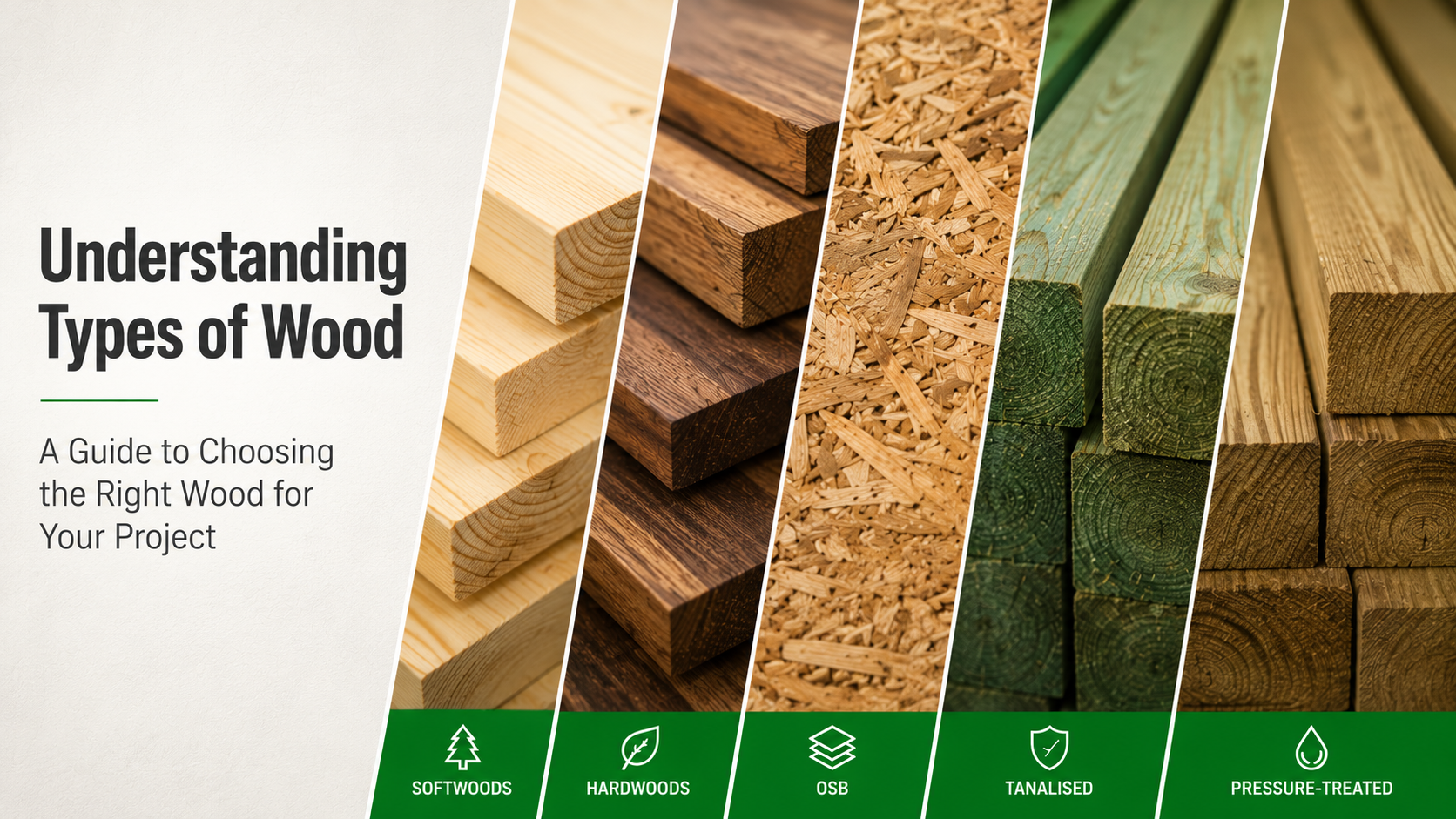
If you are new to construction or DIY, it can be handy to get an overview of the different kinds of wood available - because there are many! Knowing a little more about each can help you to choose the right timber for your next project and gives a greater chance of long-term project success that looks good for years to come.
The helpful team at NWTT reveal all you need to know.
Softwood vs hardwood
Shouldn’t all wood be hard? Well, it is; the difference between softwoods and hardwoods is the type of tree the wood comes from.
Softwoods come from cone-bearing, coniferous trees, like spruces or pines, that grow faster, are more available, are cheaper, and tend to dominate construction, fencing, and decking.
Popular softwood choices include C16-graded softwood and C24-graded softwood, both of which can be used for framing, joists, and roofing.
Hardwoods, on the other hand, come from flowering plants like oak, maple, and walnut, are denser, have visible open pores that run throughout, and tend to be reserved for furniture, flooring, and higher-wear applications as a result of this durability.
Timber sleepers can be hardwood, it just depends on the type you choose. If you need hardwood sleepers, opt for oak sleepers instead of rough sawn or UC4 sleepers.
There are a few notable exceptions:
- Yew - A softwood with a dry density that exceeds other examples like the American cherry. This means yew is generally classified as a hardwood.
- Balsa - A hardwood that is one of the softest timbers available on the market.
Rough sawn vs PAR softwood
Rough sawn and PAR (Planes All Round) softwood are two different finishes, and the right choice for the job depends on where it will be used and if it will be seen.
Rough sawn softwood is cut straight from the log with no further finishing, leaving a rough surface texture, sharp edges, and nominal sizing rather than exact sizing. For this reason, it’s a most cost-effective option and is the natural choice for structural or hidden work like:
- Framing
- Battens
- General carpentry tasks
PAR softwood, sometimes referred to as Planed Square Edge (PSE), on the other hand, has been thicknessed and planed on all sides, giving clean lines and a comfortable, splinter-free surface.
However, as it has been highly finished, the size of each will be smaller than the sawn size it started as; for example, a 25 x 200mm board will actually be closer to 19 x 90mm. This makes PAR softwood suitable for projects where the timber will be visible or handled directly, including:
- Internal carpentry
- Skirting
- Architrave
OSB vs plywood
OSB and plywood are both engineered wood panels but are different in structure. Both are also graded by British/European standards, so their application is apparent.
Plywood is made up of layered thin veneer sheets glued with the grain running in alternating directions, referred to as cross-graining or cross-laminating, to maximise strength, stability, and even load distribution.
Plywood is also:
- Classified for dry, humid, or exterior conditions under BS EN 635
- Great if specifications require a smoother finish
- Often used for furniture and cladding - when appearances matter
OSB, however, is made from wood strands instead of veneers, with layers cross-oriented (laid at right angles to each other) and bonded. This structure prevents the panel from warping, bending, or splitting, and maximises strength, dimensional stability, and load-bearing capacity.
OSB:
- Is graded from 1 to 4 under BS EN 300. OSB 1 is general purpose for interiors, OSB 2 is for load-bearing, dry conditions, OSB 3 is for load-bearing in humid conditions, and OSB 4 is for humid heavy-duty load-bearing. OSB 3 is the most common, but always check the specifications for the best results.
- Gives a rough final finish but is more common in projects where it won’t be seen, including sheathing, sub-flooring, and structural panels.
Shiplap vs loglap
Shiplap and loglap are cladding profiles designed to lock together and stop water ingress, while offering different aesthetic finishes.
Shiplap has a flat face with a rebate (notch) cut into the top and bottom edge, which overlaps with the next board once installed. This overlap creates a tight, weatherproof seal with a sharp, linear shadow line running along the wall, and looks effective on rustic and contemporary cladding products, such as:
- Fencing
- Sheds
- Outbuildings
Shiplap can also be fitted vertically or horizontally, depending on your design preference.
Loglap, on the other hand, uses the overlapping principle but shapes the face of each board with a rounded, convex profile so that the final finish looks more like a traditional log cabin - with stacked and rounded logs covering the walls.
It creates a more whimsical, cheerful finish in projects where the timber is the visual feature, making it ideal for:
- Summer houses
- Garden rooms
- Outbuildings
What is tanalised timber?
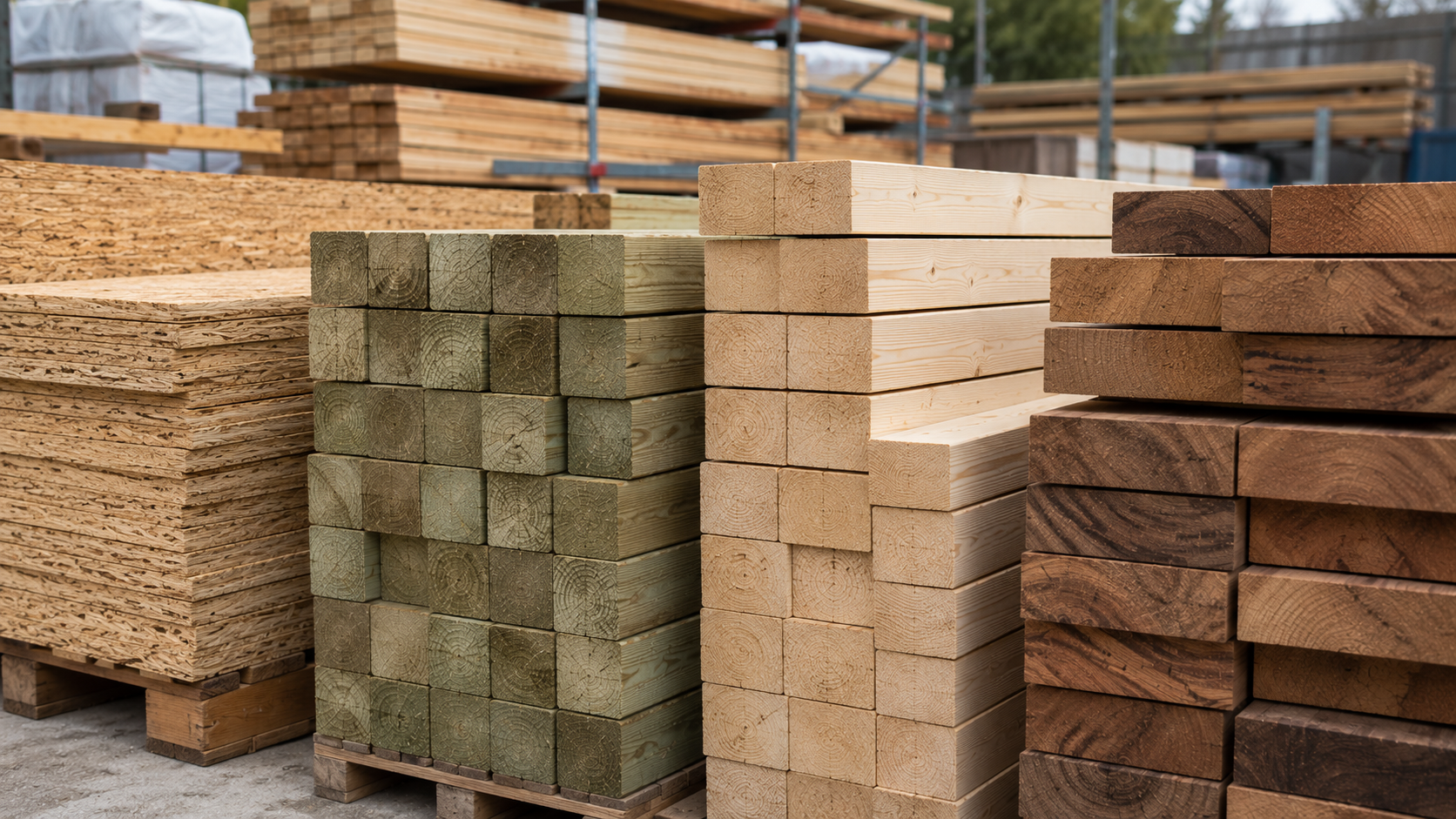
Tanalised timber is treated with pressure and a protective chemical preservative to help it last longer outdoors and resist rot, fungal decay, and insects.
First, the wood goes into a big tank, and air is pulled out of the cells. Then the tank fills with liquid preservative, and heavy pressure forces the chemical deep into the wood, imbuing the cells and therefore the wood with protection from the inside out. You can find out more about this process in our treatment guide.
When tanalised timber is chosen or specified, trades and DIY enthusiasts will find timber that has a light green or pale tint. Once exposed to the elements, this fades to a warm honey brown and an eye-catching silvery grey - something that can also make it somewhat of a design preference.
Tanalised timber is defined in BS EN 335: 2013 and comes in four classes, depending on its intended usage:
Class 1 - Internal building timbers with no risk of water ingress
UC1 could be used for internal framing, above-ground indoor floor joists, or interior furniture.
Class 2 - Internal building timber with a risk of wetting
UC2 is ideal for roof framing timbers, tiling battens, or sole plates near damp-proofing areas.
Class 3 - External timbers used above ground contact and coated
UC3 can be used for window frames and other external joinery, fence rails, and vertical cladding, decking surface boards and pergolas.
Class 4 - External timbers used in-ground or fresh water contact
UC4 is best saved for sawn or machine-turned fence posts, landscaping sleepers, retaining walls, decking support posts, and agricultural fencing and poles.
At NWTT, we treat all of our timber ourselves, at our on-site treatment centre - meaning we can meet all of your timber needs without sending you to multiple different locations!
Pressure-treated vs tanalised timber: what’s the difference?
Most simply put, nothing. Just as we might refer to all vacuum cleaners as Hoovers, this pressure-treatment process is named after the brand Tanalith, which manufactures and supplies the preservative - giving us tanalised timber.
Pressure-treated timber is handled in the same way, with vacuum pressure and added chemical preservatives; it can be any brand. In this way, both are:
- Suitable for use in outdoor projects
- A great way to extend the lifetime of external timber products
- Slightly green or pale after being treated - something that fades to a brown-grey over time
Choosing the right timber for your project with NWTT
If you are looking to complete any of the following projects, choosing the best timber for the job makes it much more likely to be successful - both in the short- and long-term.
| Type of project | Timber recommendation |
| Outdoor jobs, including fencing, decking, and sleepers | Pressure-treated soft-or hardwoods |
| Internal joinery | PAR softwood or hardwood |
| Sheathing and subfloors | OSB or plywood (load dependent) |
If you aren’t 100% certain what you need, you can speak to our experienced team at your nearest branch. We have decades of experience with the products we sell and are happy to advise or check specifications with you.
Call 01942 720 777 or order online with our secure checkout for fast and local Click & Collect service.