
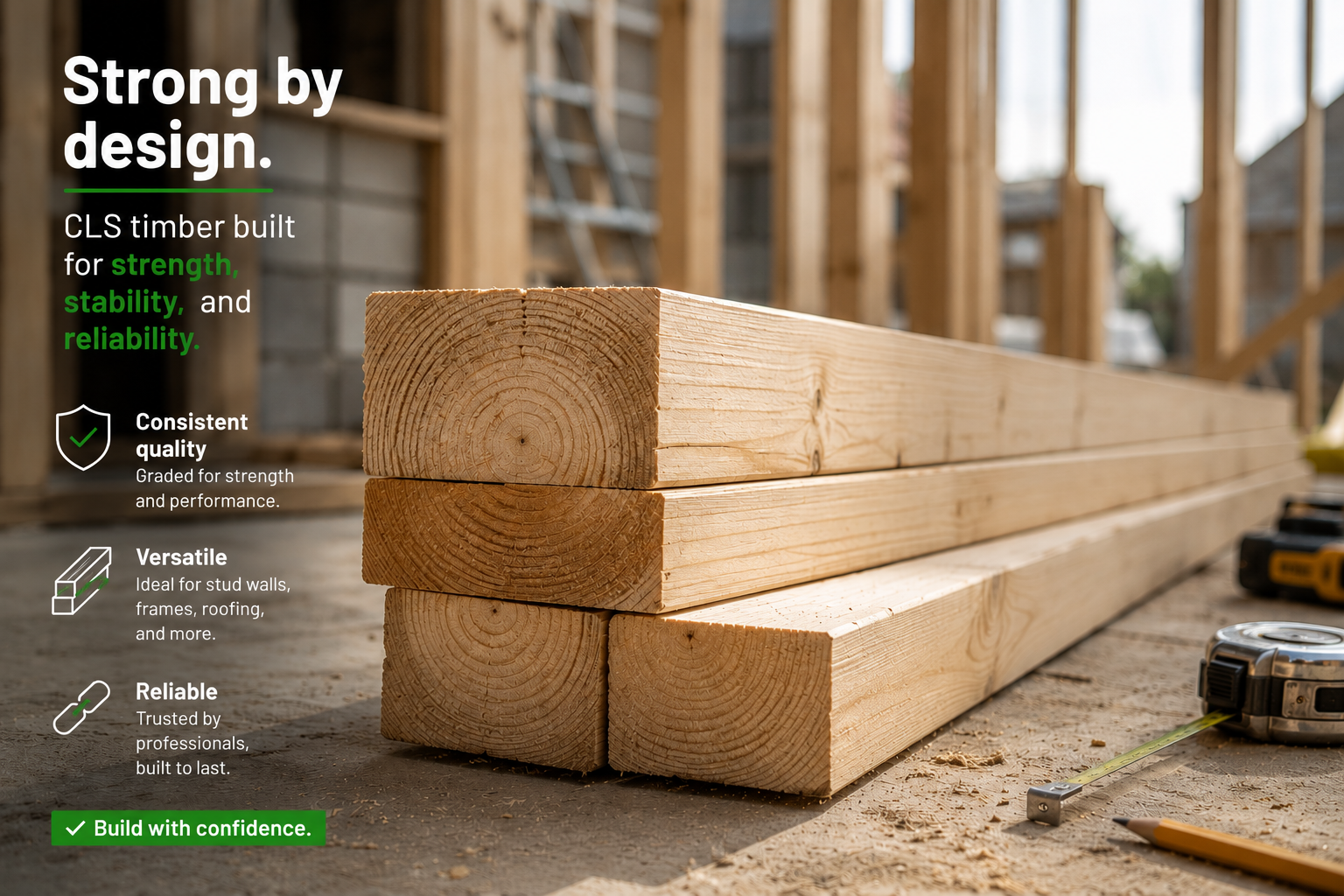
If you need to work on stud walls or are considering a partition for your home, you’ve probably come across CLS timber.
Considered a go-to material throughout the construction industry, we’ll fill you in on everything you need to know, including what it's used for, where to source it, and how it compares to scant timber - another essential you may have heard of!
What is CLS wood?
CLS stands for Canadian Lumber Standard, and it describes a specific type of planed softwood with smooth faces and rounded, eased edges.
It generally has the following key features:
- It’s kiln-dried, which keeps the wood stable and reduces the risk of warping
- You can find it in different strength gradings - the most common varieties are C16 graded softwood or C24 graded softwood
- It’s planed on all four sides - unlike rough sawn timber, it is easy and safe to handle during construction and renovation jobs
Despite having Canadian roots, most CLS timber is now sourced from Scandinavian or European softwoods, including spruce, pine, and fir. The name has simply stuck and become an industry term most are now familiar with.
What is CLS timber used for?
Originally standardised in Canada to make finding timber sizes and finishes for house building easier, most contractors now use CLS wood for:
- General internal framing
- Internal stud or partition walls
- Boxing in pipes or services
- Creating service voids
It isn’t designed to be exposed to damp or outdoor conditions, so if you need a timber that will stand up to these, look for a pressure-treated alternative specified for this purpose.
CLS vs scant - what’s the difference?
CLS and scant timber are both used for stud walls and partitions, so it’s not a surprise they are often confused. While both are suitable, they are different in finish and profile, so it’s worth being aware of, especially if you intend to use them for DIY or renovation projects.
Scant is rough-sawn or very lightly finished softwood that is generally thicker in profile. If a sturdier or heavier frame is required, or any extra bulk will not get in the way of the aesthetics, scant can be used.
If a smoother, more precise finish is needed, you’ll be working in tighter spaces, or need easier handling, CLS wood is a better choice.
NWTT stocks the following sizes of scant and CLS timber:
Scant:
- 50 x 50 mm
- 75 x 47 mm
CLS:
- 75 x 50 mm
- 100 x 50 mm
Additional extras you might need
If you are building a stud or partition wall, you likely need plasterboard to close off the structure or OSB if you are boarding out for a more structural finish. Where you need a smoother face or better screw-holding, use plywood instead.
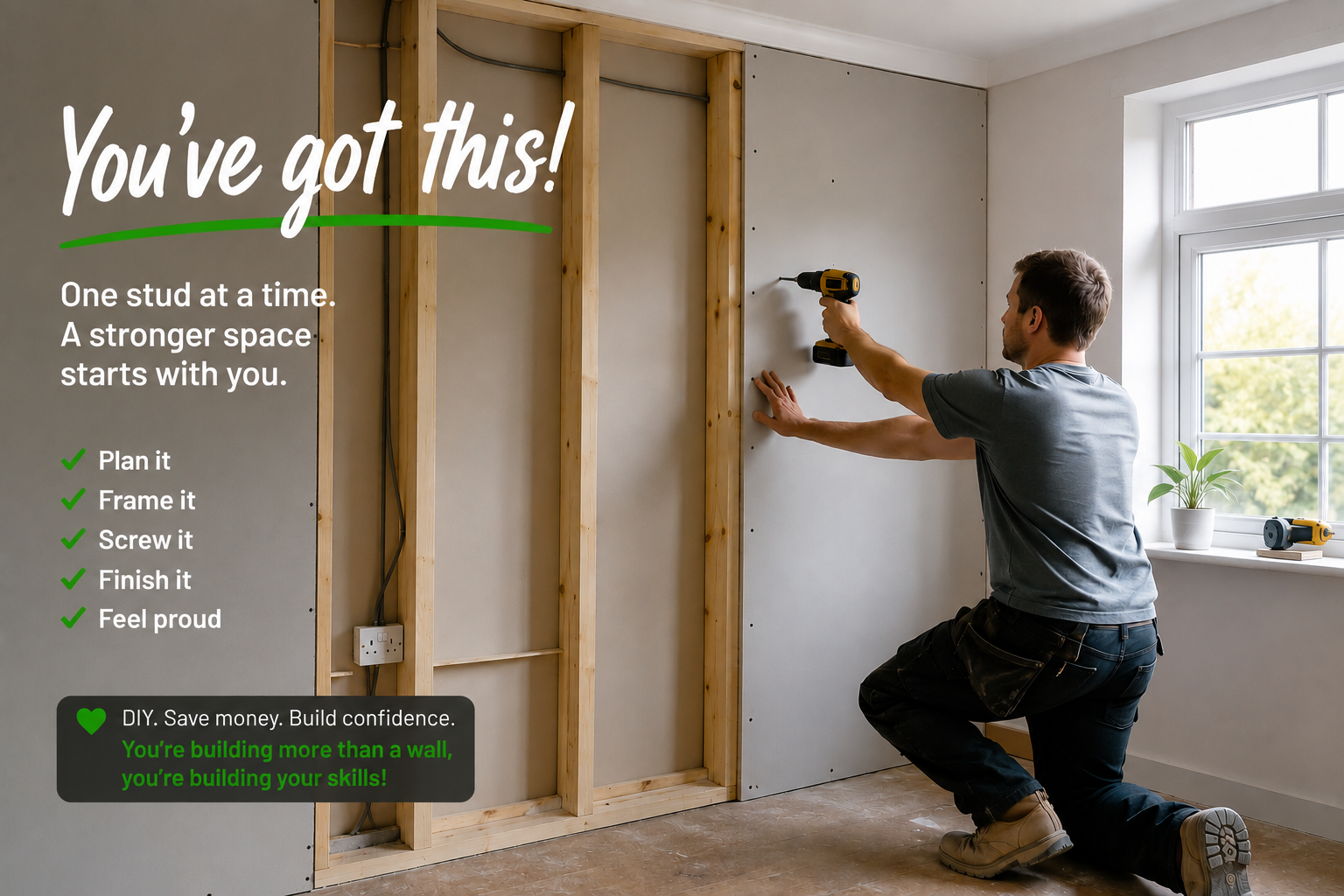
Choose structural support and bespoke advice with NWTT
Completing DIY and renovation work in your own home, for example, removing and putting up stud walls, is an effective way to maximise space more cleverly without the fuss or expense of involving contractors.
For bespoke advice, come and see us at your nearest branch - our family team has decades of experience and would happily support you to find the materials you need to bring your vision to life.